Why Gyms and Fitness Studios Need Connected Management Systems
A growing fitness business needs more than a member list. Here’s how leads, memberships, visits, classes, training packages and payments can work together.
A small gym can run on familiar faces and a spreadsheet. The person at reception remembers who renewed, the trainer knows who has sessions left, and the owner can ask about yesterday’s sales. That arrangement becomes harder to maintain as the member base, timetable and team grow.
Adding classes, personal training or private Pilates creates more decisions at each handoff. Is this member entitled to attend? Has the payment been verified? Which package covers the session? A connected management system gives staff a shared place to answer those questions, with rules that reflect how the business operates.
The hidden cost of disconnected tools
The difficulty is rarely that a spreadsheet cannot store a membership date. It is that the date also appears in a chat, a sales record and someone’s notebook. When those versions disagree, staff have to investigate before they can help the member.
A front-desk team may confirm attendance in one file while a trainer deducts a session elsewhere. Managers then reconcile the two at the end of the week. Start by following one member’s journey and marking every place information is copied. Those handoffs are useful priorities when scoping a connected system.
From lead to member: keep the history attached
A lead is more than a name and phone number. Their enquiry, interests, assigned consultant and next follow-up explain what should happen next. If conversion means typing everything into a fresh member record, the context that helped make the sale can disappear.
Connecting CRM to memberships lets the team carry the relevant history forward. A consultant can see whether a trial became a membership, and reception can work from the same identity. Define who owns a lead and when it becomes a member before deciding which screens to build.
Memberships, renewals and check-ins belong together
A membership record should make the current term and status clear. Staff need a consistent way to interpret start dates, expiry, renewals and any agreed freeze rules. Renewal work becomes easier to coordinate when the team can review upcoming expiries alongside the member’s record.
Check-in and check-out activity adds the visit history. Reception can check access against the relevant membership rather than guessing from an old payment message. Managers can examine attendance patterns separately from membership totals: a paying member and a visiting member are different operational questions.
Class booking needs more than a timetable
A published schedule does not tell staff whether a class is full, who is waiting or who actually attended. Capacity, bookings, waitlists and attendance need to refer to the same session. Otherwise a cancellation may free a place in one list while another still shows the class as full.
Agree on how staff should move people from a waitlist, record attendance and handle no-shows. Keep those actions visible against the class and member. This is about reliable staff coordination; a connected workflow does not require promising a member self-booking app.
Training and Pilates packages need reliable balances
Personal training introduces packages and sessions that may be separate from general gym access. Staff need to see the trainer, booking, package entitlement and remaining balance together. A member’s active gym membership does not necessarily mean they have a paid training session available.
Private and semi-private Pilates can involve different package rules, instructor availability and participant arrangements. Make those distinctions explicit rather than treating every booking as a group class. Agree when a session is deducted and how cancellations or no-shows affect the balance. A clear history helps staff explain an adjustment without searching through messages.
Sales and payment verification shape the reports
Recording a sale and confirming payment are separate steps. A transfer awaiting verification should be distinguishable from a verified payment, so staff know what still needs review. The sale should remain attached to the member and the membership, pass or package it concerns.
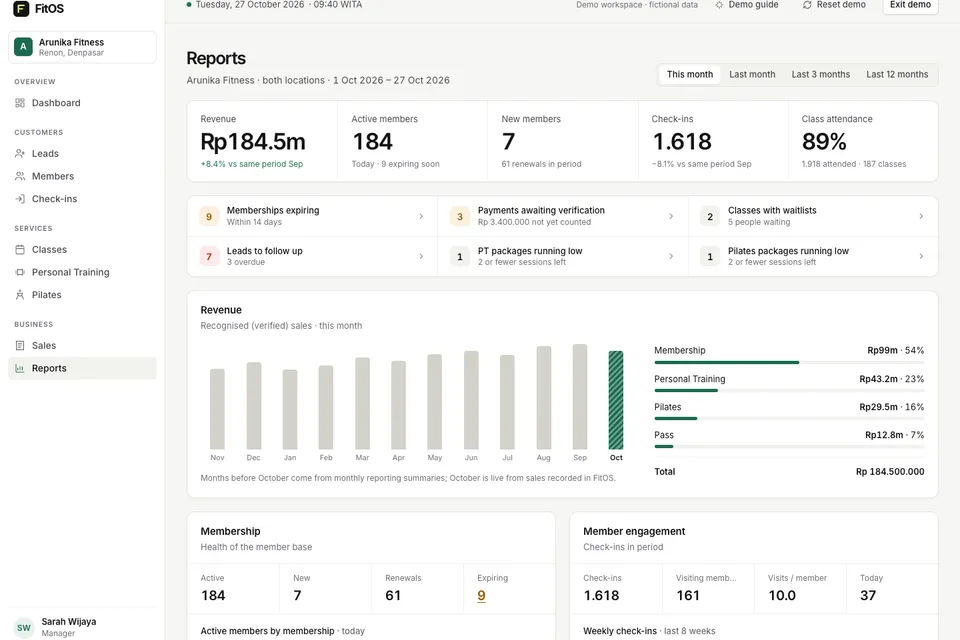
Management reports are more useful when their definitions are clear. Which dates define the period? Which payment statuses count toward revenue? Are active members measured today while sales cover the month? Document those rules and keep them consistent across screens. A dashboard should help managers inspect the underlying activity, rather than conceal a reconciliation problem.
What changes for the people running the business
Managers get a shared view of renewals, revenue and outstanding work. Reception can handle visits and booking questions with the right member context. Trainers and instructors can refer to sessions and package balances instead of keeping a parallel personal tally.
Access still matters. A trainer may need attendance and entitlement information without needing the full sales view. Map responsibilities and permissions alongside the workflow. The aim is to give each role the information needed for the next decision, while keeping changes traceable.
Explore the idea with FitOS
FitOS is an interactive concept demo built by Fun Factory to make these connections tangible. It brings CRM, memberships, check-ins, classes, personal training, Pilates, sales and reporting into one fictional fitness business. The business, members and financial figures are demo data, not a real client’s results.
Try following a member from their record to a package balance, then compare operational activity with the Reports page. FitOS demonstrates a possible approach; it is not an off-the-shelf SaaS subscription or a promise that every gym should use the same process. Your membership rules, staffing and reporting needs should shape the system.